
Get a Free Quote
Thank You!
We'll get back to you shortly. For immediate help, call (540) 900-0207.

Septic Roanoke installs, repairs, and pumps residential septic systems across Roanoke and the Roanoke Valley. We put in new systems for homes that have never had one and full replacements for systems that have reached the end of the line, and that covers the whole system: the tank, the distribution box, and the drain field that does the real work of returning treated water to the ground. When a system backs up or a field stays wet, we find the actual cause and fix it, and we handle the routine tank pumping that keeps everything healthy in between.
Out here, a septic system is not optional. Most homes beyond the city sewer lines run on their own system, and what the ground will accept is different on almost every lot. The valley sits on limestone and dolomite, which is karst, so bedrock and sinkholes turn up where you least expect them, and Roanoke County is the only county in Virginia that spans five physiographic regions, so the soil can change from one side of a property to the other. That is why a new or replacement system starts with a soil evaluation and a permit through the Virginia Department of Health, and why no honest contractor can quote the job blind. We walk the site, read the soil, lay out a system that will pass, and give you a straight price at a free on-site visit.
Septic problems rarely announce themselves until they are urgent. These are the situations that bring homeowners to us, and any one of them is worth a call before it turns into a bigger repair.
A new build, an addition, or a property with no system at all needs a brand-new septic system sized to the home and the soil. We handle the soil evaluation, the Health Department permit, and the full install from tank to drain field.
Slow drains, gurgling fixtures, odors in the yard, or a system that is decades old are signs it is near the end. We tell you honestly whether it can be repaired or whether a replacement is the smarter spend.
Soggy ground, standing water, or bright green stripes over the field usually mean the drain field is saturated or clogged. We find out why and repair or rebuild the field before it fails completely.
Virginia now requires a septic inspection before a home on septic changes hands. We inspect the tank, baffles, and drain field, document the condition, and handle any repairs the sale depends on.
From a brand-new system to a failing drain field to a routine pump-out, these are the services that keep a home on septic running.
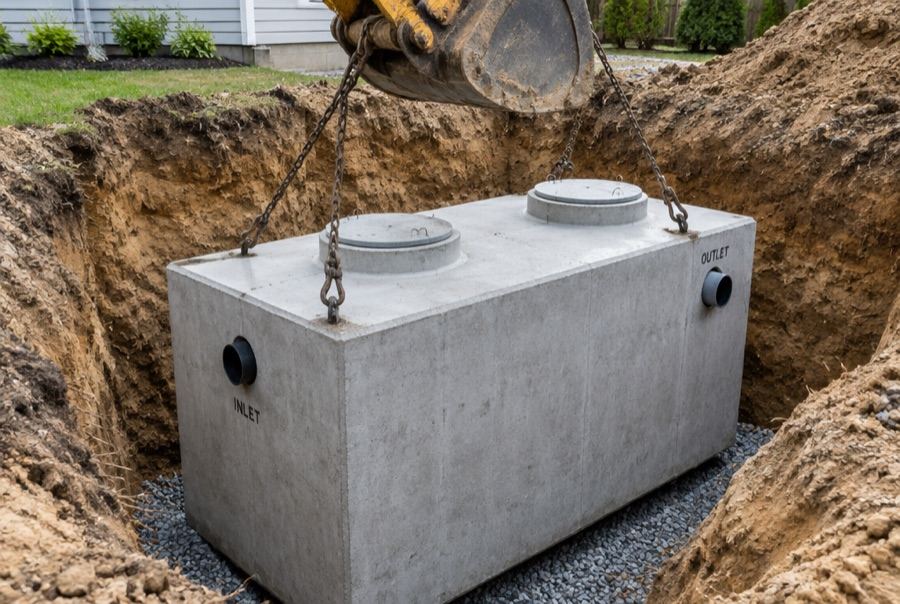
A new septic system is the heart of any home that is not on city sewer, and we install them from the ground up. That means sizing the tank to the number of bedrooms, laying out a drain field the soil can actually absorb, and setting the distribution box that splits the flow evenly across the field. We install complete systems for new construction and for homes that have never had one, and we handle full replacements when an old system has reached the end of its life.
Because the Roanoke Valley's soil changes so much from lot to lot, the system has to match the ground. A property with deep, well-draining soil can take a conventional gravity drain field, while heavy clay, shallow bedrock, or karst may call for an alternative system such as a mound, low-pressure pipe, or pressure-dosed design that keeps the field working where a standard one would fail. We lay out the right one based on what the soil evaluation shows, not a one-size-fits-all package.
Every new or replacement system in Virginia runs through the Health Department, so we take care of the soil evaluation with a licensed evaluator, pull the construction permit, install to the approved design, and schedule the final inspection so you finish with an operation permit in hand. You get a system built to pass and documented for the next time you sell.
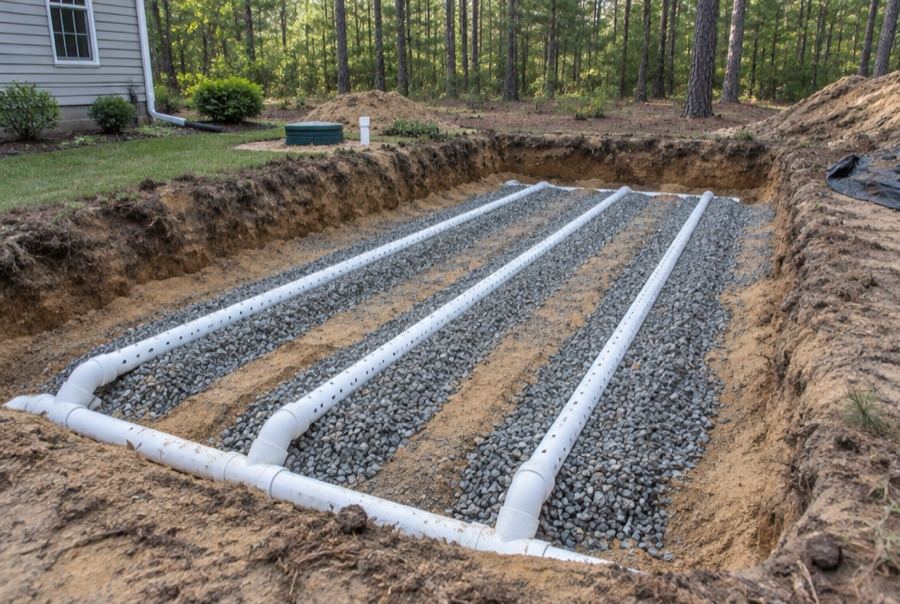
Most septic calls start with a symptom: a slow drain, a gurgle, a wet spot in the yard, or an odor that will not go away. We track the problem back to its source instead of guessing, because the fix for a clogged line is very different from the fix for a saturated drain field, and charging you for the wrong one helps nobody.
On the tank side, we repair and replace baffles, broken or missing lids, risers, distribution boxes, effluent filters, and the pumps and alarms on systems that have them. On the field side, we clear and restore drain fields that have started to fail, repair collapsed or root-filled lines, and when a field is truly done, we tell you plainly and lay out a replacement rather than selling you a patch that will not hold.
A lot of drain-field trouble in this area traces back to water the ground cannot move, so part of a real repair is getting the site right, not just swapping a part. We give you an honest read on whether a repair buys you years or months, and a written price either way, at a free on-site visit.
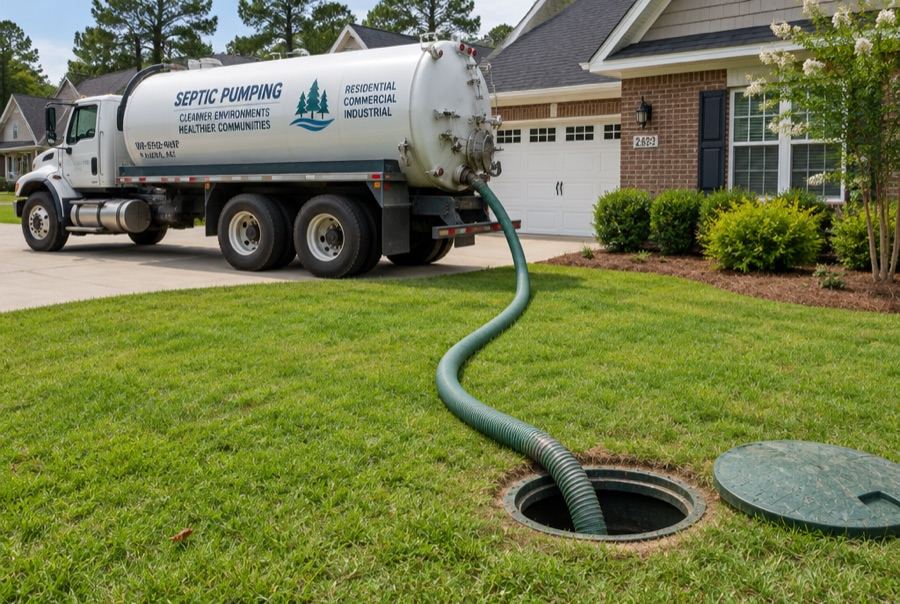
Pumping is the single most important thing you can do to protect a septic system, and it is the cheapest. Over time, solids build up in the tank and the scum layer thickens, and if they are not pumped out they wash into the drain field and clog it, which turns a few-hundred-dollar service into a repair that runs into the thousands.
Most Virginia households should have the tank pumped every three to five years, and a family of four on a 1,000-gallon tank is usually on the shorter end of that range. We handle routine service and emergency backups, and while we are there we check the baffles, the filter, and the sludge level so you get a real picture of the system's health, not just an empty tank.
A pump-out is also the best early warning you can get. More than once, a routine service is where we first spot a baffle that has failed or a field starting to back up, while it is still a small fix. If we see something, we show you and give you the straight story.

A new or replacement septic system in Virginia is not something you can just dig and install. It runs through the Virginia Department of Health, and here that means the local health district has to approve what goes in the ground before a shovel moves. The reason is the soil, and in this valley the soil is complicated.
Before any system is designed, a licensed soil evaluator digs test pits and reads the ground: the soil texture and how fast it drains, how deep the seasonal water table sits, how far down bedrock or a restrictive layer is, and the slope of the land. The Health Department also requires room for a full reserve drain field in case the first one ever fails. That evaluation decides what kind of system your lot can actually support, which is why no honest contractor quotes a new system sight unseen.
In Virginia the evaluation and design are done by an Authorized Onsite Soil Evaluator, a state-licensed professional, and submitted to the Health Department for a construction permit. For most new and replacement systems that step is required, not optional. We handle the evaluator, the paperwork, and the permit for you. In our part of the state the review is usually one of the quicker ones, and the whole path from soil evaluation to permit in hand typically takes a few weeks to a couple of months.
The Roanoke Valley sits on limestone and dolomite, which dissolves over time into the sinkholes and underground voids known as karst. On top of that, Roanoke County is the only county in Virginia that spans five physiographic regions, so the soil and bedrock can change dramatically across a single property. Karst ground can require extra geologic review, because effluent that reaches a void can bypass the natural filtering the soil is supposed to do. This is exactly why the soil evaluation matters so much here.
A standard gravity drain field needs enough good soil above bedrock or the water table to treat the water. When the evaluator finds less than about a foot and a half of suitable soil over a restrictive layer, a conventional system is off the table, and the answer is an alternative design such as a mound, low-pressure pipe, or pressure-dosed system. Rock that has to be removed can add to the cost. We design for what the ground will pass, so the system works for the long haul instead of failing early.
We manage this whole process start to finish, from the soil evaluation and the permit to the install and the final inspection, so you are not left trying to navigate the Health Department on your own. It starts with a free on-site visit.
Once the soil evaluation and permit are in place, a typical install runs in four stages.

We start with the licensed soil evaluation, design the system the ground will support, and pull the construction permit from the Health Department before any digging begins.
We excavate and set the tank, connect the line from the house, install the distribution box, and build the drain field to the approved design, whether that is a conventional field or an alternative system.
Before anything is covered, the system is inspected against the permit. Once it passes, we backfill, grade the area, and make sure the ground is left clean and settled.
With the final inspection passed, the Health Department issues the operation permit that authorizes the system for use. We hand off the paperwork so your system is properly on the books for the next time you sell.
We are not a general contractor who also digs septic on the side. Installing, repairing, and pumping septic systems is the whole business, so you get a crew that reads soil, knows the Health Department process, and has seen whatever your system is doing before.
Septic work can't be quoted over the phone, so we come out, look at the system and the site, and tell you what is actually going on. If a repair makes more sense than a replacement, we say so, and the visit and the estimate are free.
Before any work starts you get a written price that covers the job, so you are not hit with add-ons halfway through. If the ground turns up something the soil evaluation could not predict, we stop and talk it through before we proceed.
We are licensed and insured, and we pull the proper Health Department permits instead of burying a system and hoping no one asks. That protects you now and keeps your system on the books for the next time you sell.
Septic pricing depends almost entirely on your soil and the type of system it will accept, so these are honest ranges to help you plan, not a quote. The real number comes from a soil evaluation and a free on-site visit.
Routine pump-out and inspection of a typical residential tank. Larger tanks, hard-to-reach lids, or a tank that is long overdue can raise it.
From a baffle, filter, riser, or pump up to drain-field repair and restoration. We price the actual fix after we find the cause.
A complete new or replacement system: tank, drain field, permit, and soil evaluation. Conventional systems sit at the low end, alternative and mound systems higher.
What moves the price: the system type the soil requires (a conventional field costs far less than a mound or pressure-dosed system), the size of the tank and field, how much excavation and access the site needs, whether rock has to be removed, and the permit and soil-evaluation fees.
These are typical Roanoke-area ranges to help you plan, not a quote. Because the soil sets so much of the cost here, the only way to get a real number is a soil evaluation and a free on-site visit.
Straight answers to what Roanoke homeowners ask us most about installing, repairing, and maintaining a septic system.
It depends heavily on the soil and the system your lot requires, but most new systems in Virginia run from around $6,000 for a straightforward conventional system up to $20,000 or more for an alternative or mound system on a difficult site, with the statewide average around $7,500. The only way to get a real number is a soil evaluation, which tells us what the ground will accept, followed by a free written estimate.
For most households, every three to five years. A smaller tank or a larger family fills up faster, so a family of four on a 1,000-gallon tank is usually closer to every three years. Regular pumping is the cheapest insurance there is, because solids that are not pumped out eventually reach the drain field and clog it.
Yes. Replacing a drain field, relocating components, or swapping a tank requires a permit through the Health Department. A straight tank-for-tank replacement on the same spot follows a simpler repair-permit path, and routine pumping needs no permit. We handle whichever your job calls for.
Soggy ground or standing water over the field, bright green stripes of grass above it, slow drains and gurgling inside, and sewage odors in the yard. Sometimes it backs up indoors. If you see any of these, have the field looked at before it fails completely, since an early repair is far cheaper than a replacement.
Yes, and here more than most places. The valley's soil changes from lot to lot, and the karst limestone underneath means bedrock and voids can turn up anywhere. A licensed evaluator reads the soil and water table to determine what system your property can support, and the Health Department will not permit a system without it. That is why no honest contractor gives a firm price before the ground is evaluated.
The path from soil evaluation to permit in hand usually takes a few weeks to a couple of months, and our region's Health Department review tends to be one of the quicker ones in the state. The install itself is usually a matter of days once the permit is issued. You get a realistic timeline with your written estimate.
The most common is a conventional system, a tank and a gravity drain field, which works where the soil drains well. When the soil is poor, shallow, or sits over karst, an alternative system is used instead, such as a mound, a low-pressure pipe, or a pressure-dosed design that spreads the effluent more carefully. The soil evaluation decides which one your lot needs.
In most cases, yes. Virginia now requires a septic inspection before a home on septic changes hands, done by a licensed professional, covering the tank, baffles, and drain field. We perform the inspection, document the condition, and handle any repairs the sale depends on so a septic issue does not hold up your closing.
We would not recommend it beyond the simplest maintenance. A new system requires a licensed soil evaluation, a permit, and an install built to pass inspection, and a drain field put in the wrong soil or depth fails fast and is expensive to redo. For most homeowners, this is a job for a licensed crew.
We install, repair, and pump septic systems for homes across Roanoke and the surrounding valley, from the city out to the rural properties where septic is the only option. If you do not see your community listed, call us, we very likely cover it.